
Case Study
Revamping Japanese Language Education for Foreign Care Workers in Their First Year in Japan —Developing "Practical Skills for the Workplace" Through AI and Hands-On Training
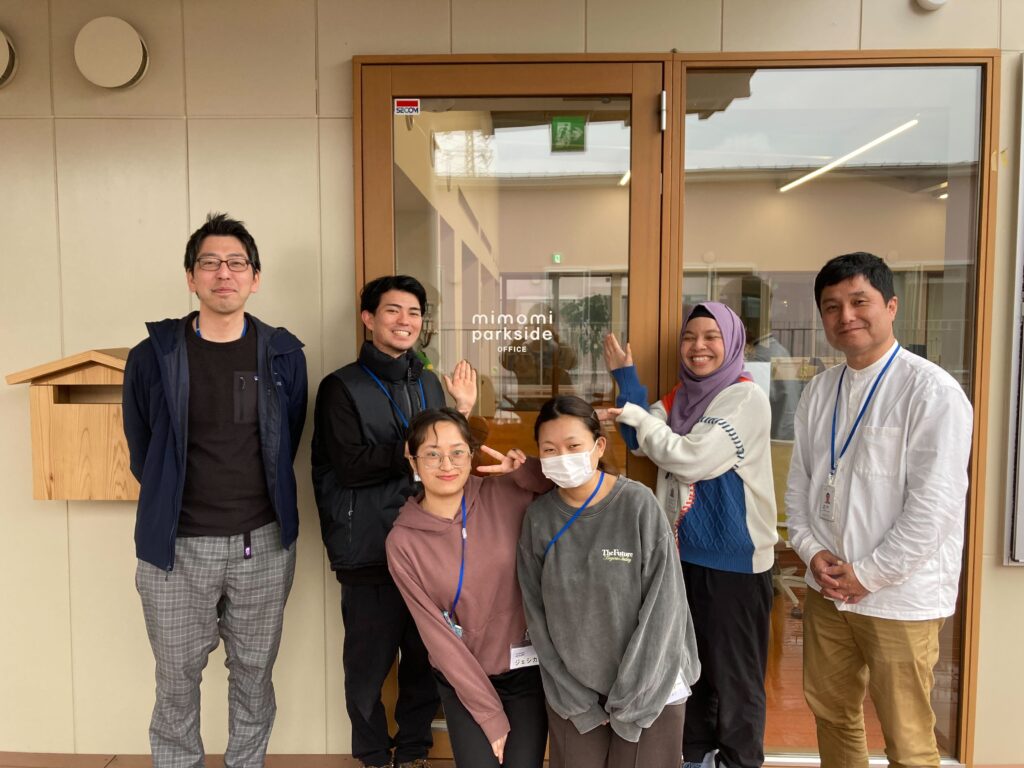
About Fukushigakudan
Social Welfare Corporation Fukushigakudan was among the first to begin accepting foreign workers in 2008, the inaugural year of the EPA (Economic Partnership Agreement) program. Today, staff from diverse nationalities—including Indonesia, the Philippines, Vietnam, and China—are actively contributing on the front lines, accounting for 10.3% (54 individuals) of the total workforce.The organization employs staff with diverse residency statuses, including those under the EPA (43 employees), as well as those with Specific Skilled Worker and Long-Term Care Worker visas, and they have established themselves as a vital force supporting the organization’s care services.
Content List
Here is a summary of the key topics covered in this post. Click on any item below to skip ahead.
Results of Implementation: Before / After
Before
● Before Implementation
- Due to insufficient Japanese language skills, misunderstandings arose when communicating with clients, leading to complaints and the need for retraining
- Staff were unable to accurately understand work instructions, making it difficult for them to work independently on on-site tasks such as transfer assistance
- Staff were unable to handle dialects or conversations specific to dementia care, preventing them from fully utilizing their care skills
After
● After Implementation
- By combining AI and online learning, we maintained a 90% retention rate, ensuring that practical vocabulary immediately applicable on the job became ingrained
- Smoother communication led to zero complaints related to communication issues
- A deeper understanding of instructions has significantly expanded the scope of tasks staff can complete independently without relying on others
What were the challenges in Japanese language education?
Feedback from the Field: Stagnation in care skills caused by language barriers
Although this organization has a long track record of accepting workers and possesses expertise in training EPA personnel, it faced new challenges as the workforce grew through various schemes such as the Specific Skilled Worker program. The biggest challenge was that “sufficient Japanese language education was not being provided to the organization’s support staff.”
As a result, even when applying the traditional training guidelines for EPA workers, staff with insufficient Japanese language skills were unable to keep up with the content. Misunderstandings arose in work instructions and communication with clients, and cases began to emerge where this negatively impacted the quality of care and client satisfaction.
Miscommunication on the Front Lines and the Case of a Specific Support Staff Member
The impact of this issue was particularly evident in the case of one of our in-house support staff members . Because on-site work instructions were not fully conveyed accurately, the staff member began working independently prematurely . This led to misunderstandings regarding the nuances and tone of their interactions with clients, which in turn resulted in complaints. The organization took the situation seriously and was forced to provide the staff member with an additional month of retraining.
Foreign staff members on the front lines were particularly prone to stumbling in the following specific situations:
- Understanding the client’s intentions: Because their Japanese comprehension was insufficient, they ended up “brushing off” the client’s concerns, causing the client to feel dissatisfied or agitated.
- Regional language barriers: Dealing with regional dialects specific to the elderly in the area (such as the Kurimoto dialect), which cannot be learned from textbooks.
- Communication in dementia care: The difficulty of understanding the context behind the words spoken by clients with dementia and communicating appropriately.
Details of the program conducted this time
Hybrid Learning Model Combining AI and Online Classes
To address these challenges, we introduced a new learning program that combines technology with human-led instruction. Its key feature is the integration of an AI conversation app with online classes, creating a virtuous cycle of learning: “Understand → Practice → Apply in the Field.”
Specifically, we implemented the program by combining the following two approaches:
- Daily repetitive practice using the AI conversation app “CareKaiwaAI”
- Real-world role-playing: We conduct practical conversation practice based on specific scenarios that could actually occur in caregiving settings.
- 10 minutes of daily practice: By limiting the daily study time to a manageable 10 minutes, we created an environment where participants can consistently practice speaking even amidst busy work schedules, such as shift work.
- Practical understanding of specialized terminology: Rather than simply memorizing caregiving terminology as dry knowledge, participants learn it by integrating it into practical conversations.
- Consolidation and Application Through Weekly Online Classes
- Lessons led by instructors with on-the-ground expertise: Specialized instructors who understand the realities and unique challenges of the caregiving field lead practical Japanese lessons.
- Integration with App-Based Learning: Building on what you’ve self-studied using “CareKaiwaAI,” you’ll solidify your knowledge through live conversations with instructors.
- Improvement of Practical Interpersonal Skills: You will thoroughly practice appropriate pronunciation, subtle nuances of language, and expressions for addressing clients with care—all of which are particularly essential in the field.
This hybrid learning design—which involves daily speech practice with AI followed by weekly confirmation and application through dialogue with an instructor—has created a learning model that effectively improves both Japanese comprehension and practical on-site application skills in a short period of time.
Quantitative Results: High Retention Rates and High Ratings for "Practical Use in the Field"
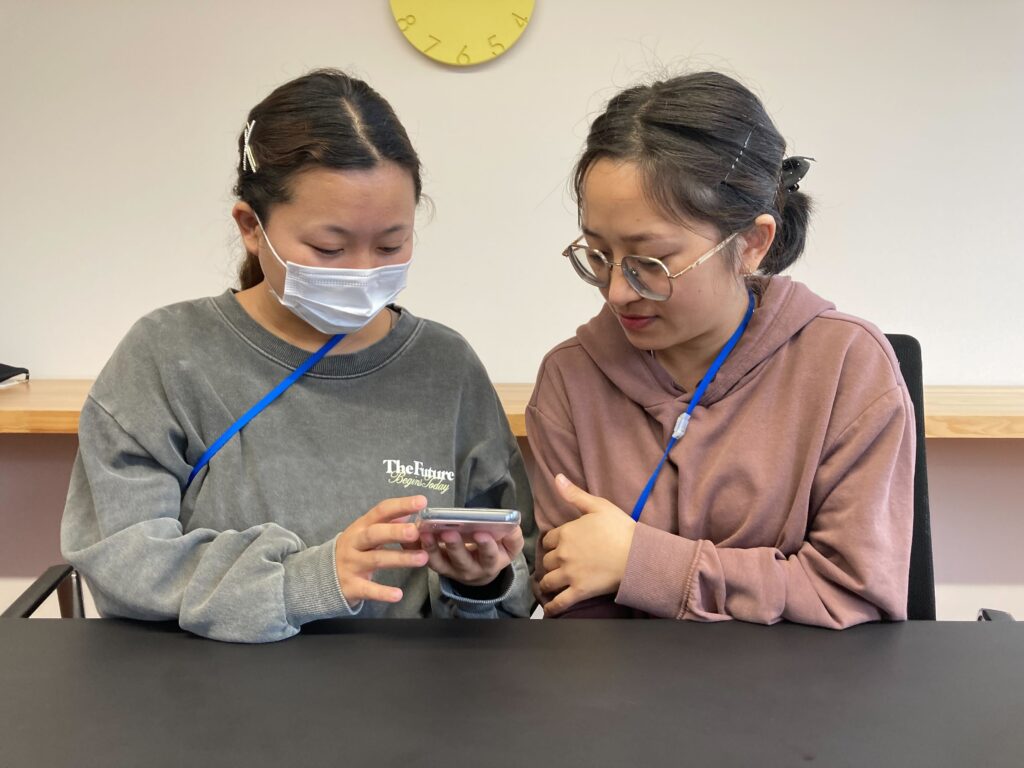
The introduction of this hybrid learning model has yielded very positive results in both quantitative data and surveys.
maintained an extremely high level of 90%.The convenience of just 10 minutes a day and the practical content that could be immediately applied on the job strongly motivated foreign staff to engage in self-directed learning.
1.High retention rate driven by a “90% pre-study completion rate”
- One of the most notable outcomes was the continuity of learning. Despite the busy environment of daily shift work, the completion rate for pre-study (preparation) via the app maintained an extremely high level of 90%.The convenience of just 10 minutes a day and the practical content that could be immediately applied on the job strongly motivated foreign employees to engage in self-directed learning.
2. All participants felt that “pre-study via the app was helpful”
- In a survey of participants (using a 5-point scale), all respondents rated the “effectiveness of app-based prep” highly, selecting either “4 (Helpful)” or “5 (Very Helpful).” Furthermore, many staff members reported that having prior input made the online classes “much easier to understand,” demonstrating that repetitive practice via the AI app dramatically improved the quality of subsequent practical lessons.
3.Clear Evidence of “Practical Usefulness in the Field”
- In the overall program evaluation, the majority of participants also rated the “practical usefulness” category as “4 (useful)” or “5 (very useful).” Scores for “sense of growth” were also high, and the data confirms that participants are acquiring “real-world skills”—not just theoretical Japanese education—that can be immediately applied to communicate with clients in their daily work.
Post-Implementation Results: Improved On-Site Communication and Care Quality
Dramatic Changes from the Perspective of On-Site Staff: The Moment Anxiety Turned to Trust
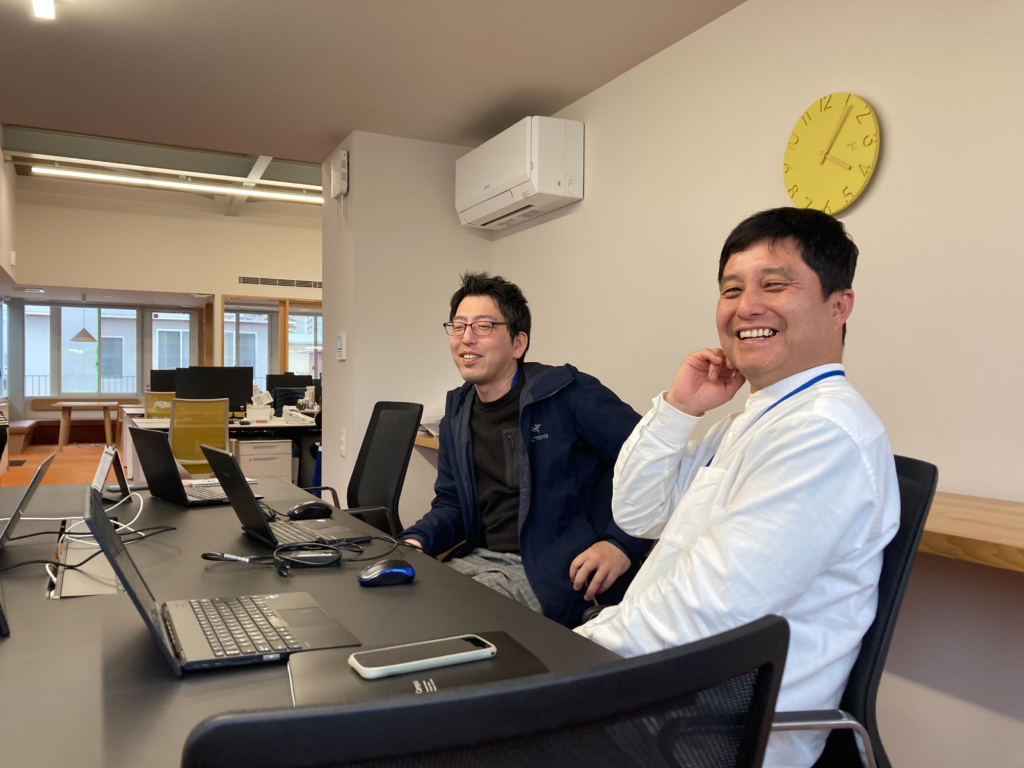
Since the program’s implementation, Japanese staff on the front lines have expressed surprise and delight.
Even staff members who previously struggled to communicate with residents—experiences that sometimes led to complaints—have now shown remarkable growth. In the past, anxiety over language barriers often left them looking stiff and passive, but now that they have gained confidence in their communication skills, their natural cheerfulness has returned.
“Conversations with clients have become much smoother, and complaints stemming from communication misunderstandings—like those we used to have—have completely disappeared. They’ve become a bright, reliable asset who is indispensable on the front lines,” say their colleagues, who wholeheartedly endorse this transformation.
From the Learners Themselves: A Clear Increase in Understanding Work Instructions and Performing Care Tasks Independently
Surveys of program participants also reveal numerous comments expressing a strong sense of personal growth. Particularly notable are the reduction in mistakes due to “improved understanding of instructions” and “greater independence in performing tasks.”
Working Independently and Fewer Mistakes
“I used to struggle to understand work instructions in Japanese and needed help from colleagues. But now I understand the instructions and can complete tasks on my own without asking for help. Since I can correctly understand instructions, my mistakes have decreased, and I’ve gained the confidence to respond quickly to situations.”
Before and After in Specific Care Techniques
“Previously, due to language anxiety, I couldn’t transfer a client to a bed on my own. But now, I’m able to safely assist with transfers by myself.”
Conclusions
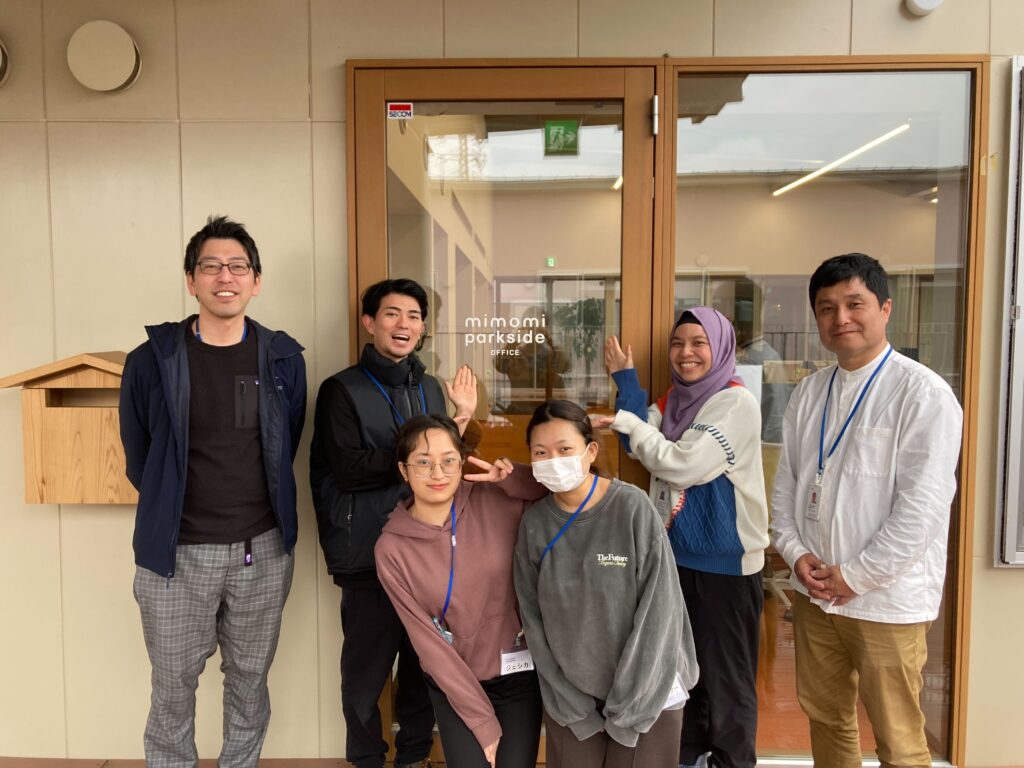
The success story at Fukushi Gakudan demonstrates how a practical Japanese language training system tailored to the workplace can powerfully enhance the care skills and confidence of foreign staff members. When language barriers prevent them from fully demonstrating their inherent potential and kindness on the job, it is a significant loss for both the staff members themselves and the facility.
Our company supports the creation of environments where foreign staff can thrive and contribute for the long term by removing these “communication barriers” through a combination of technology and human effort. Moving forward, we will continue to deliver solutions to address these challenges to more organizations nationwide through this service, supporting Japan’s long-term care sector with the power of language education.
Related Case Studies
Building a Sustainable Workforce
Overcome language barriers and improve staff retention rates. Download our latest guide to see how data-driven learning strategies directly impact foreign talent stability and exam success.
Transform Your Training Strategy
Book a discovery session to see KizunaBridge in action. We’ll discuss your facility’s specific challenges and design a tailored learning pathway that integrates seamlessly with your operations.

Kizuna Bridge
Company Overview
- Company Name
- English Company Name
- Director / CEO
- Established
- Description
- Address
- KizunaBridge Co., Ltd.
- KizunaBridge, K.K.
- Ryoji Nagai
- April 2, 2025
- Provision of Japanese language learning, caregiving study and retention support platform for foreign caregivers.
- 1-2-36 Kajino-cho, Koganei City, Tokyo 184-0002, Japan
Kizuna Bridge
Company Overview
- Company Name: KizunaBridge Co., Ltd.
- English Company Name: KizunaBridge, K.K.
- Director / CEO: Ryoji Nagai
- Established: April 2, 2025
- Description: Provision of Japanese language learning, caregiving study and retention support platform for foreign caregivers.
- Corporate Number: 1012401042932
- Address: 〒184-0002 東京都小金井市梶野町1-2-36