
Case Study
Overcoming the hurdles of "New Employee Training" with AI and hands-on support to develop foreign care staff who can thrive on the job
Content List
Here is a summary of the key topics covered in this post. Click on any item below to skip ahead.
Results of Implementation: Before / After
Before
● Before Implementation
- The introductory training was video-based, making it difficult to keep up with the material and apply it in practice
- Understanding was superficial when technical terms and caregiving rules were presented solely in Japanese
- Instructions were not understood on the first try, placing a burden on on-site communication
- Staff were unable to ask questions, leading to mistakes based on personal judgment and anxiety
After
● After Implementation
- Through native language × AI × online classes, we established a “understanding → speaking → practice” cycle
- The content of the introductory training is internalized as practical Japanese that can be used on the job
- Increased interaction and conversation volume, leading to smoother on-site communication
- Learners’ confidence and initiative have improved, leading to an increase in the tasks they can handle
1. Spatel Co., Ltd.’s Situation and Background of Implementation
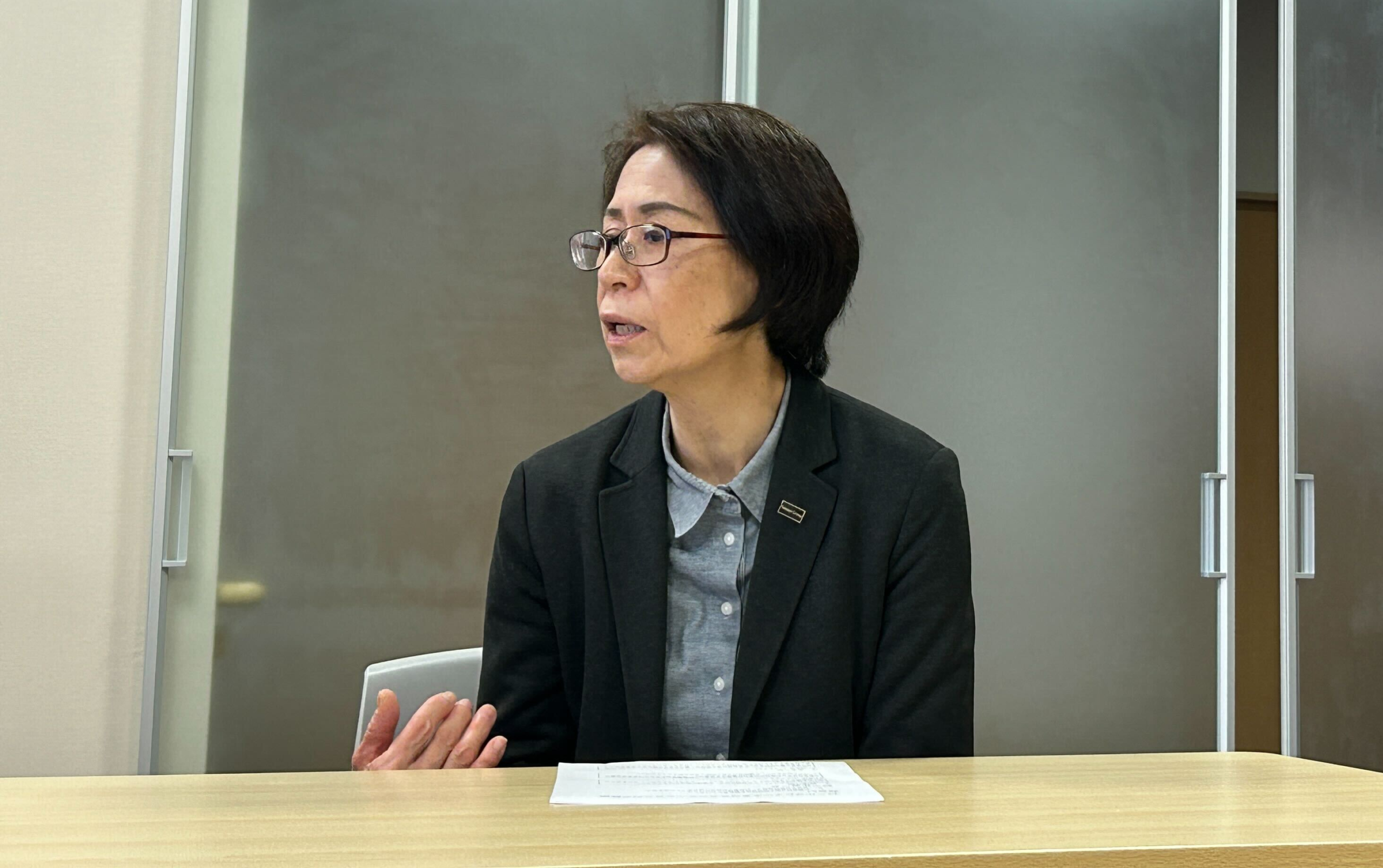
Spatel Co., Ltd. has traditionally accepted international students from schools training certified care workers, so the groundwork for understanding and accepting foreign staff within the facility was already well established. However, regarding the acceptance of staff under the “Specific Skills” visa category, this was effectively the first such case—excluding a previous instance where a staff member returned home midway through the program without completing the Initial Training.
Based on past challenges, the company had a strong desire to “ensure that Specific Skills staff also thoroughly acquire the knowledge necessary for the caregiving field and to create an environment where they can settle in long-term and thrive.” Since this coincided with an opportunity to utilize government subsidies, the company decided to implement our program to establish a new training system specifically tailored for Specific Skills staff.
2. What were the challenges regarding Japanese language education?
The introduction of this program had the following clear objectives:
- To complete the initial training within one year of arrival and develop the practical skills necessary to handle situations in home care settings as needed
- To develop the Japanese language proficiency and foundational skills necessary to pass the Certified Care Worker examination within four years of arriving in Japan
Spatel had planned to conduct the Initial Training Program through “pre-recorded online video lectures.” However, for foreign workers in their first year in Japan, the Initial Training Program presented a significant hurdle. They felt that learning solely through videos had its limitations, as trainees struggled not only to grasp the meanings of specific technical terms but also to keep up with understanding the rules and systems of caregiving explained in Japanese.
Additionally, the following challenges were observed in on-site communication:
- Voices are often too soft, leading to frequent interruptions in smooth conversation.
- Instructions were not understood on the first try, requiring the recipient to ask for clarification multiple times.
- There was a tendency not to ask questions when unsure, leading to acting on their own judgment. When receiving feedback, they sometimes insisted on their own opinions.
To address these challenges, there was a need for “accompaniment-style learning support” that ensures a solid understanding of the content of the introductory training and helps participants acquire the Japanese language skills essential for caregiving, leading to the launch of this joint program.
3. Specific Details of the Program
To help trainees internalize the content of the introductory training as “Japanese that can be used on the job,” we designed a four-step, cyclical learning program that combines CareKaiwaAI with online classes.
- STEP 1: Pre-sharing training materials in the participant’s native language (building a foundation for understanding)
Since the content contains many technical terms that are difficult to understand in the first year after arriving in Japan, we pre-share the training content for the upcoming week in the participant’s native language, such as English. This allows them to grasp the basic concepts before learning them in Japanese. - STEP 2: Repetitive practice using the AI conversation app (preparation for practical use)
Using CareKaiwaAI, we conducted role-plays tailored to specific caregiving scenarios based on the training content. By establishing a daily 10-minute speaking habit, we transformed “technical terms” into “actual phrases used in caregiving.” - STEP 3: Weekly Online Supplementary Classes (Consolidating Understanding)
In classes with an instructor, participants reviewed what they learned from the AI through real-life conversation scenarios. We practiced interactions, refined expressions, and addressed questions in a supportive environment. This is a crucial phase for transforming “understanding” into “practical application.” - STEP 4: Mini-Tests (Checking Comprehension)
We administered mini-tests on the weekly curriculum to assess understanding of technical terms and confirm the use of appropriate communication phrases. This visualized learning progress and helped reinforce weak areas for the following week.
4. Program Outcomes
Quantitative Results
In a post-program survey conducted after the approximately 5-month learning period, we received extremely positive feedback from all participating learners.
- Perceived Improvement in Japanese Skills: All participants responded that their skills “improved significantly and they gained confidence.”
- Effectiveness of online lessons and pre-class materials: All participants responded that they were “extremely helpful.”
- Ease of understanding the content: All participants responded that the content was “easy to understand” or “very easy to understand.”
- Overall satisfaction with the program: On a 5-point scale, all participants rated it a “5” (full marks: very satisfied).
5. On-site Reactions After Implementation and Changes in Learner Behavior
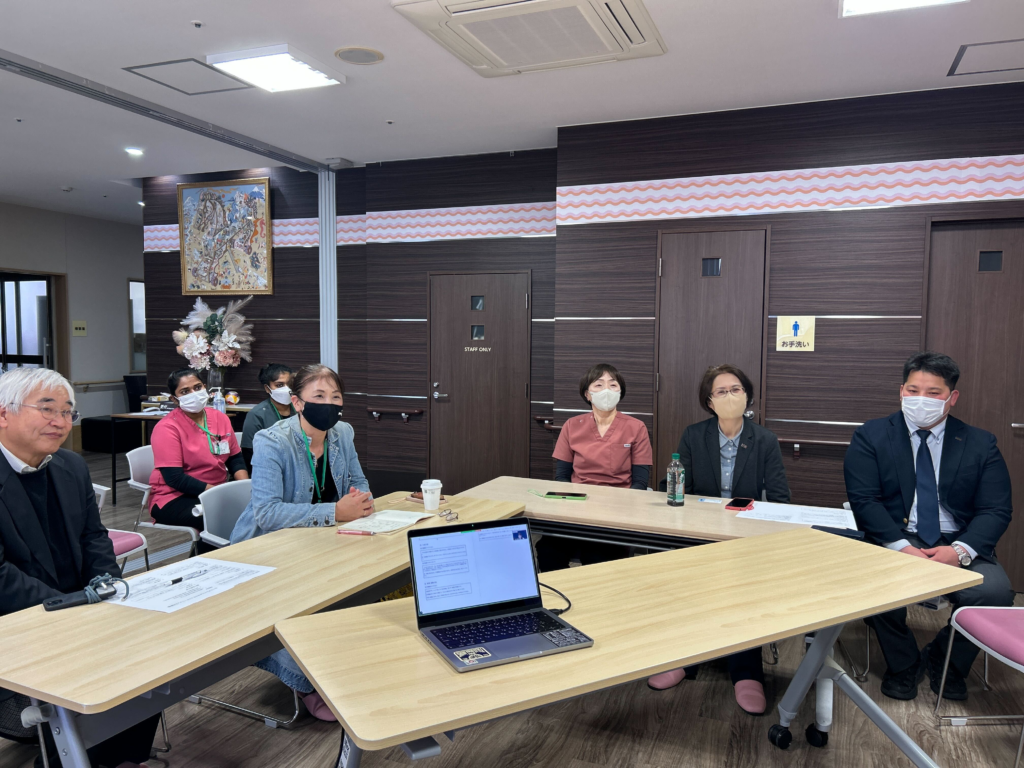
Feedback from Spater Staff
Following the program’s implementation, we have received feedback from on-site staff indicating the following positive changes in foreign staff members’ “inner attitudes” and “approach to work”:
- A Positive Attitude Toward Work and Increased Motivation
Motivation toward their duties has increased, and their attitude toward work has become very positive. As a result, the number of tasks that can be entrusted to them with confidence has increased on the front lines. - The Emergence of Mutual Understanding: “They Actually Understand”
While communication in daily interactions with Japanese staff did not change dramatically, a major achievement was that Japanese staff came to realize, “Actually, they do understand instructions and the situation quite well.” Making their underlying Japanese language skills and level of understanding visible has led to a greater sense of reassurance on the front lines. - Significant Growth and Potential Demonstrated at the Presentation Session
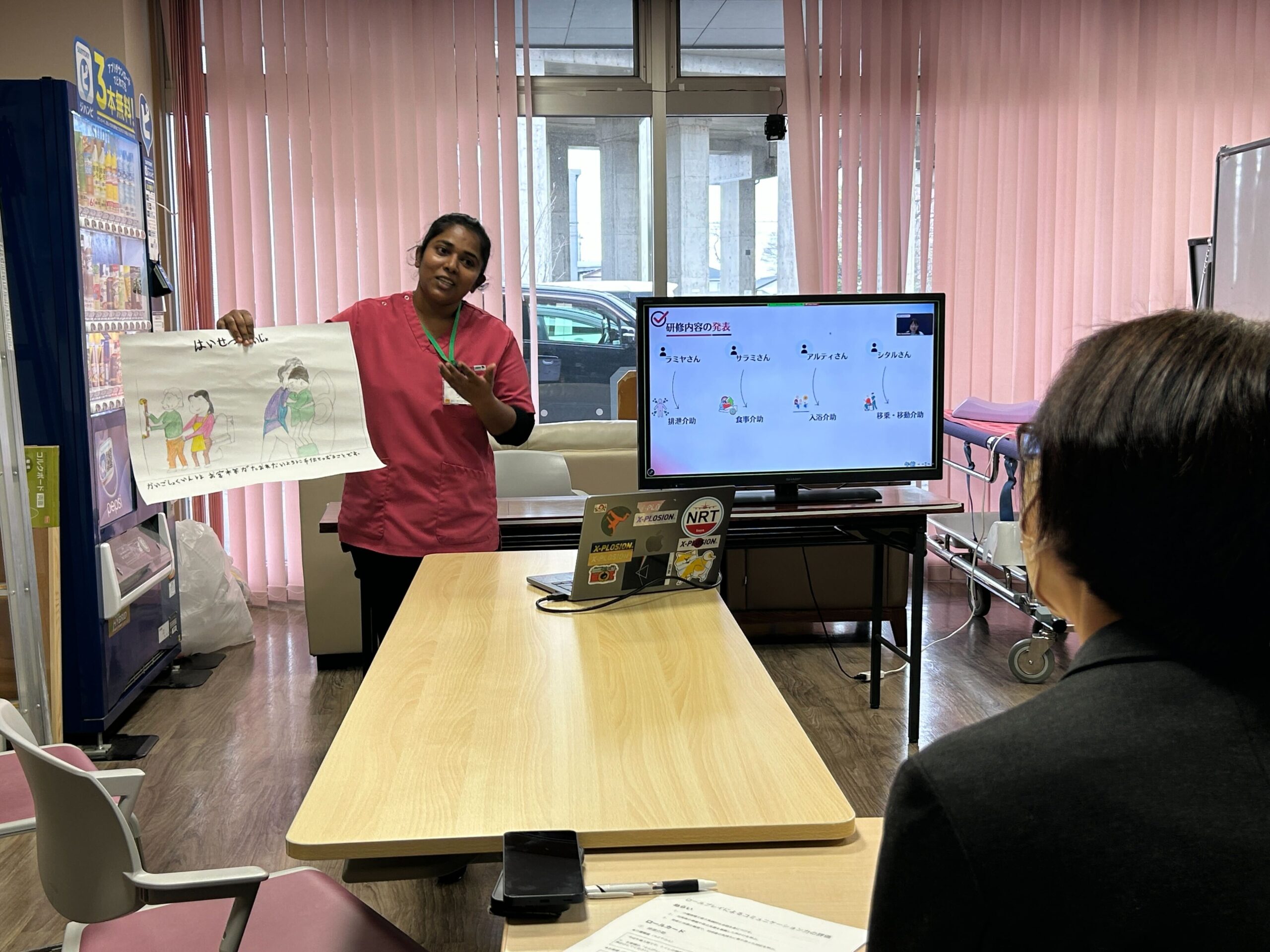
While some hesitation still remains when it comes to speaking up on the job, their solid growth in communication skills was clearly evident during the learning outcomes presentation session. Staff members have expressed high expectations for their hidden potential and future success, saying, “They should be able to do even more in their daily work!”
Feedback from Spater Staff
In post-program surveys, many learners expressed their joy, stating, “My fear of speaking Japanese has disappeared, and I can now speak up with confidence.”
Ramiya’s Story: From “Shyness” to “Thoughtful Communication”
[Before the Program]
“Before, the technical terms were difficult, and I felt a little shy about speaking Japanese, so I couldn’t speak well.”
[After the Course]
“By studying communication skills in the online lessons, I can now talk effectively with clients during work. I’ve learned to choose kind words to ensure my message gets across clearly. I speak much more now, and my anxiety has decreased significantly. I’m truly grateful to the instructor for helping me speak so well!”
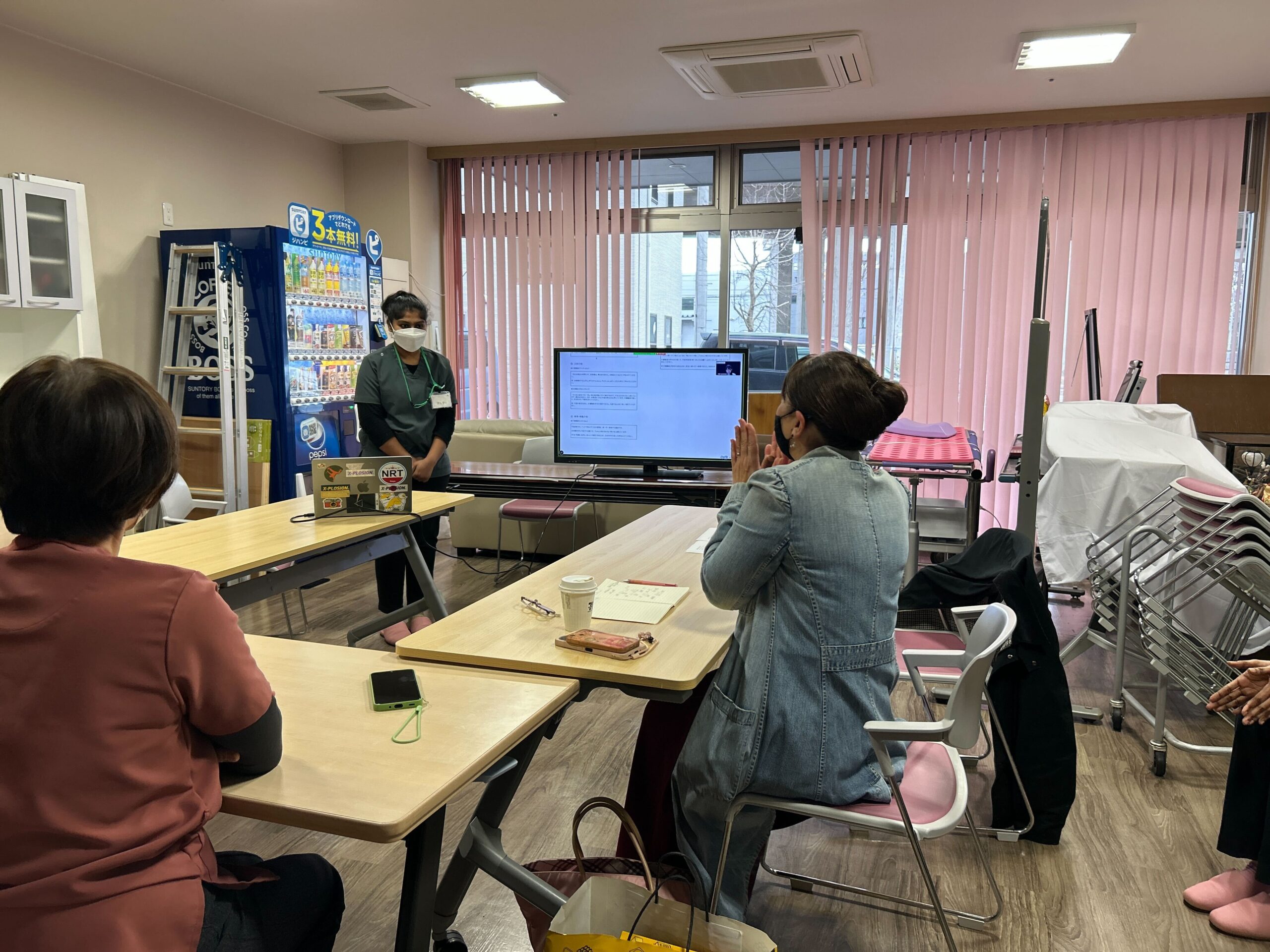
Alti’s Story: From “Fear of Making Mistakes” to “Confident Communication Skills”
[Before the Program]
“At first, I had trouble understanding explanations in Japanese and communicating with Japanese staff, so I wasn’t able to speak Japanese at all.”
[After the Course]
“The cycle of reviewing material in class was very effective. Now I have a solid understanding of both my caregiving work and the Japanese language, and mistakes on the job have decreased significantly. My communication skills have improved greatly; I can now speak clearly with both staff and clients, and I truly feel the positive changes in myself.”
Psychological Changes Brought About by the Support
A common thread among the learners was that the steps of “pre-understanding in their native language” and “review during lessons” eliminated their “anxiety about speaking.” Their motivation to speak Japanese on their own and their actual speaking volume have increased significantly, leading to more proactive behavior on the job.
6. Summary
Quantitative Results
In a post-program survey conducted after the approximately 5- This case study at Spater demonstrates that treating new employee training not merely as a means to “obtain certification,” but as a practical program linked to Japanese language learning, directly leads to actual “improvements in caregiving skills.”month learning period, we received extremely positive feedback from all participating learners.
Providing this kind of hands-on learning support at the “time of entry”—when foreign workers face their greatest anxieties—deepens the learners’ confidence and, as a result, leads to their early success and retention on the job.
We hope that many care facilities facing challenges in training and retaining foreign staff will utilize this service, and we aim to contribute to reducing the burden on the front lines and creating workplaces filled with the smiles of foreign staff.
Related Case Studies
Building a Sustainable Workforce
Overcome language barriers and improve staff retention rates. Download our latest guide to see how data-driven learning strategies directly impact foreign talent stability and exam success.
Transform Your Training Strategy
Book a discovery session to see KizunaBridge in action. We’ll discuss your facility’s specific challenges and design a tailored learning pathway that integrates seamlessly with your operations.

Kizuna Bridge
Company Overview
- Company Name
- English Company Name
- Director / CEO
- Established
- Description
- Address
- KizunaBridge Co., Ltd.
- KizunaBridge, K.K.
- Ryoji Nagai
- April 2, 2025
- Provision of Japanese language learning, caregiving study and retention support platform for foreign caregivers.
- 1-2-36 Kajino-cho, Koganei City, Tokyo 184-0002, Japan
Kizuna Bridge
Company Overview
- Company Name: KizunaBridge Co., Ltd.
- English Company Name: KizunaBridge, K.K.
- Director / CEO: Ryoji Nagai
- Established: April 2, 2025
- Description: Provision of Japanese language learning, caregiving study and retention support platform for foreign caregivers.
- Corporate Number: 1012401042932
- Address: 〒184-0002 東京都小金井市梶野町1-2-36